
The Population Debate: From Overpopulation to Underpopulation
 Amartya Mishra
बिहीबार, २०८३ असार २५ गते, ०९:५७ मा प्रकाशित
Amartya Mishra
बिहीबार, २०८३ असार २५ गते, ०९:५७ मा प्रकाशित
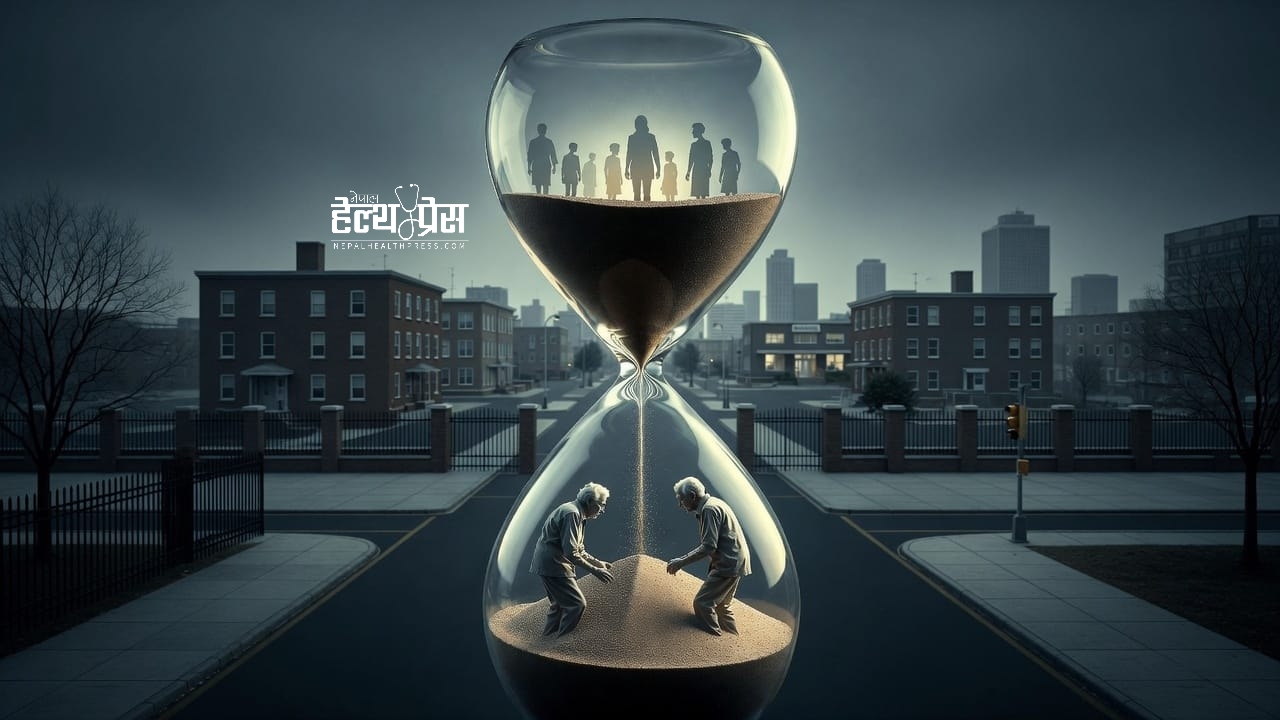
“Overpopulation, overpopulation, overpopulation”—a term so deeply ingrained in the consciousness of the 21st century that it has been accepted as an absolute truth, without question or doubt.
As William Shakespeare aptly wrote in The Merchant of Venice, “The seeming truth which cunning times put on to entrap the wisest” (Act 3, Scene 2). This highlights how deceptive appearances can mislead even the wisest individuals if they fail to question what seems true. It serves as a warning against blindly trusting what is presented as truth without deeper scrutiny.
First printed in 1600, the same year Giordano Bruno was burned at the stake by the Catholic Church for supporting the heliocentric theory—the idea that the Earth revolves around the Sun—a belief that challenged the established truth of the time. Bruno’s tragic fate resulted from questioning what was widely accepted as truth. In the years since, many brave individuals have sacrificed their lives in pursuit of true knowledge. More than four centuries later, the words from The Merchant of Venice continue to resonate.
Since our earliest years of education, we’ve all been asked to write essays on overpopulation, myself included. So, you’re likely already familiar with the term. To put it simply, overpopulation occurs when the population of a species exceeds the carrying capacity of its environment. In the case of humans, overpopulation happens when the number of people exceeds the Earth’s ability to sustainably support them, leading to resource shortages, environmental degradation, and social challenges.
Today, however, we are not discussing overpopulation. Instead, we are focusing on a term that, under current circumstances, may be even more concerning: underpopulation. Underpopulation occurs when the population of a specific area, region, or country is too low to sustain its economy or ensure continued development. This situation can arise from factors such as low birth rates, high emigration, or limited immigration, leading to shortages of workers, taxpayers, and people to support public services. An aging population can further worsen the situation. As the elderly population grows and death rates rise, the working-age population shrinks, accelerating the effects of underpopulation, especially when birth rates remain low and immigration is restricted. This can lead to labor shortages, economic stagnation, and challenges in maintaining infrastructure and social systems.
As of this writing, according to Worldometer, the global population is approximately 8.3 billion. The world’s most populous country is India, with about 1.48 billion people, followed by China, with around 1.41 billion. Together, these two countries account for approximately 35% of the world’s population, meaning that about 7 out of every 20 people live in either India or China. The third position is held by the United States, with a population of about 349 million—roughly four times smaller than India’s.
But how did we reach 8.3 billion people? It is a remarkable achievement considering humanity was once pushed to the brink of extinction.
According to various studies, the smallest human population ever estimated likely occurred around 70,000 years ago during a near-extinction event. This period coincides with the eruption of the Toba supervolcano, which is believed to have caused a volcanic winter, dramatically altering the Earth’s climate and creating a severe population bottleneck. Genetic evidence suggests that the human population may have been reduced to just several thousand individuals—possibly as few as 1,000 to 10,000 people—although the exact number remains uncertain.
Since then, the human population has grown by billions, first reaching 1 billion around 1804, then 2 billion by 1927 (123 years later). It took another 33 years to reach 3 billion in 1960, 14 years to reach 4 billion in 1974, and another 13 years to reach 5 billion in 1987. The population grew by another 12 years to reach 6 billion in 1999, another 12 years to reach 7 billion in 2011, and just 11 years to reach 8 billion in 2022.
Based on these figures, you might be persuaded to think that overpopulation is indeed our greatest challenge, supported by the exponential growth witnessed over the last two centuries. But this is only one side of the coin—and even that side is gradually changing.
Looking at the other side of the coin, many countries around the world are now struggling with the consequences of underpopulation or aging populations accompanied by persistently low birth rates.
Let’s start with China, formerly the world’s most populous country from at least 1950 until it was surpassed by India in 2023.
A combination of factors—including low birth rates, an aging population, and the long-term effects of the one-child policy (1979–2015)—has led China to face a serious demographic decline.
Introduced by the Chinese government in 1979 under Deng Xiaoping, when the total fertility rate stood at 2.7 children per woman (already declining from around six children per woman in the 1950s and early 1960s), the one-child policy aimed to control rapid population growth, reduce poverty, and improve living standards by limiting most families to a single child. The policy was enforced through incentives for compliance and penalties for violations, but it also produced significant demographic challenges, including an aging population and a gender imbalance. The policy was gradually relaxed and officially ended in 2015. Although families were once again allowed to have more children, China’s fertility rate has fallen to around 1.0 children per woman in recent years—well below the replacement rate of 2.1.
As of 2022, approximately 280 million people in China—about 19.8% of the population—were aged 60 or older. This figure is projected to rise substantially in the coming decades, with experts forecasting that older adults will make up around 34–40% of China’s population by 2050.
Since India is by far the closest country to China in terms of total population, let’s compare the two. As of 2021, India had around 138 million people aged 60 or older, constituting about 9.1% of its population. By 2050, this proportion is expected to rise to around 19–20%, approximately matching China’s current age structure. This means China is already experiencing today what India may face roughly 25 years from now. However, since India never implemented a one-child policy or similarly strict birth-limiting measures, it may be better positioned to avoid some of the demographic challenges China now faces.
Now, let’s look to the east of China. Ever heard of K-pop, K-dramas, or K-beauty? Then you’ve already met South Korea’s global cultural influence. Yet behind this cultural success lies one of the world’s most serious demographic challenges.
What South Korea desperately needs is more babies—babies, and more babies! Yes, I said it three times for a reason.
South Korea has had the world’s lowest fertility rate since 2013. In 2024, it stood at around 0.72–0.75 children per woman—roughly one-third of the replacement rate of 2.1 needed to maintain a stable population.
Based on current projections, South Korea’s population could decline significantly in the coming decades—roughly half of its current population of about 51.7 million in the long term. At the same time, a large share of its population could be aged 65 or older by the end of the century. As unfortunate as it is, it is almost a perfect recipe for demographic doom.
To address this crisis, the South Korean government has introduced several initiatives. These include generous financial support, with families eligible to receive up to 29.6 million won (about US$22,100) per child over eight years to help cover childbirth, medical care, postnatal care, and childcare expenses. Parents also receive enhanced parental leave benefits, expanded childcare subsidies, and housing assistance, all intended to reduce the financial burden of raising children and encourage higher birth rates.
Policies, however, continue to evolve, and further initiatives may emerge in the years ahead. Whether these measures will be enough to reverse South Korea’s demographic trajectory remains an open question.
Now, moving even further east from South Korea (we’re heading east quite a lot, aren’t we? That definitely hints at a pattern), let’s take a look at Japan—the land of an ancient civilization.
This rich heritage is reflected in its people. Japan has one of the highest life expectancies in the world, averaging about 84 years. To put this into perspective, a person born in the United States lives, on average, about seven years less than someone born in Japan.
While this remarkable longevity is undoubtedly a success, does Japan have the fertility rate needed to balance it? The short answer is no.
With an estimated fertility rate of around 1.15–1.2—well below the replacement rate of 2.1—Japan has remained below replacement level since the mid-1970s. As a result, people aged 65 and older now account for a record-high ~29–30% of the country’s population.
People are certainly living longer, but Japan itself is growing smaller. Its population peaked at around 128 million in 2010 and has been declining for 15 consecutive years, now standing at approximately 122.4 million.
Here’s an interesting—or perhaps not-so-fun—fact: in Japan, more diapers are now produced for adults than for babies.
You might even have noticed this trend in your favorite anime. If not, take a moment to think: how many siblings does your favorite character have? What about their friends? Anime often reflects real-life societal issues, and Japan’s persistently low birth rate is one of them. Only-child characters may subtly reflect this demographic trend, highlighting themes of loneliness, family pressure, or heightened parental expectations.
While the 20th century taught us to fear a crowded planet, the 21st century’s quietest crisis might just be an empty one. As the global cradle continues to empty, we must ask ourselves: what happens to a world built for growth when the people themselves begin to vanish?








प्रतिक्रिया दिनुहोस